When you consider a US undergraduate degree, you'll be joining the world's most diverse higher education system. One that welcomes over 1.05 million international students and is ranked at the top of the global. No wonder there are eight of the top ten universities in the world here. It's possible to be ranked among the top 200 QS World Universities and encounter institutions such as MIT, Stanford, Harvard, and Caltech, which consistently set the standard for undergraduate excellence. In the US, one of the standout features is undergraduates' access to research and work experience. You can look for paid research assistantships, summer programs, and industry internships. The sheer scale of these opportunities in the US is what sets its undergraduate education apart when transitioning from high school to university.
Studying in the USA is not just about getting a degree; it is about stepping into a flexible, forward-looking, and experiential education system that is designed in such a way that prepares students for careers around the globe. More than 5,300 accredited colleges and universities in the USA offer the widest variety of bachelor's degree options across disciplines for international students wishing to continue their education after high school.
Academic flexibility is one of the significant benefits of US undergraduate education. Before declaring a major, most American universities allow students to experiment with different subjects, frequently until the end of the second year. This framework and system support students in developing a solid interdisciplinary foundation while assisting them in making analytical academic decisions.
Admissions decisions in the USA go beyond your grades alone. Universities adopt more of a holistic review process that considers academic performance, personal essays, extracurricular involvement, leadership, and letters of recommendation.
Hands-on learning is a defining feature of American undergraduate programs and courses. Students get early access to the faculty-led research, innovation, and well-equipped labs, paid research assistantships, summer programs, and industry internships. Many undergraduates graduate with published research, patents, or real-world projects, gaining opportunities that are often reserved for postgraduate students in other countries.
Below is the ranking of the top US universities according to the QS World University Rankings.
| Ranking | University | Location |
|---|---|---|
| 1 |
Massachusetts Institute of Technology (MIT)
|
Cambridge, Massachusetts
|
| 2 |
Stanford University
|
Stanford, California
|
| 3 |
Harvard University
|
Cambridge, Massachusetts
|
| 4 |
California Institute of Technology (Caltech)
|
Pasadena, California
|
| 5 |
University of Chicago
|
Chicago, Illinois
|
| 6 |
University of Pennsylvania (UPenn)
|
Philadelphia, Pennsylvania
|
| 7 |
University of California, Berkeley (UC Berkley)
|
Berkeley, California
|
| 8 |
Cornell University
|
Ithaca, New York
|
| 9 |
Princeton University
|
Princeton, New Jersey
|
| 10 |
Yale University
|
New Haven, Connecticut
|
Follow these steps to successfully apply for UG in USA programs abroad.
Begin by shortlisting universities that align best with your profile, goals, and budget. Evaluate reputation, program structure, campus environment, acceptance rate, location, costs, and post-graduation prospects to ensure the right fit.
This marks the transition from planning to action, as students develop their skills by improving their performance and participating in extracurricular activities, thereby building a well-rounded profile.
This involves shortlisting institutions that offer the best possible fit for their profile and goals. Every detail is carefully evaluated for factors such as reputation, structure of courses, campus life, ratio of admissions, location, cost of tuition, and prospects after graduation.
Preparation involves preparing for tests such as IELTS, TOEFL, SAT, or ACT, as required by universities. It is exam-centric and designed to help applicants build a strong foundation and perform at their maximum potential.
At this stage, all efforts are focused on writing of application documents, including essays, Statements of Purpose, and Letters of Recommendation, each tailored to the student. For U.S. undergraduate applications.
Effective mentoring of students on proper scholarship application procedures. Interview preparation primarily involves grooming students in communication and confidence-building techniques to present their profiles effectively. This phase has proven highly influential in improving entry outcomes and reducing costs.
Receiving an offer marks a major milestone in the journey. This is the point at which students assess the offers they have received and accept admission to the university that best meets their goals.
This step covers all required financial and formal documentation, including loan applications and bank and/or university forms.
Dream Ladder provides comprehensive F-1 visa support, assisting with I-20 review, SEVIS payment, DS-160 filing, interview preparation, and document verification to ensure students meet all U.S. visa requirements with confidence.
Once visa approval is granted, travel planning will begin. Flight planning and other pre-flight activities are included in this process to ensure efficient travel to the destination country.
The final tier aims to facilitate the transition of the students to the USA. Support is provided for student accommodation, campus induction, and integration into campus life of the students to ensure a smooth transition to the UG program.
From course selection to visa approval, we provide end-to-end support for your international education journey
Experience the difference of working with experts who understand the nuances of graduate admissions
As a mentor and planning engine for sending students abroad for undergraduate education in the USA, Dream Ladder is a tool for them. The U.S. admissions process is complex and holistic, and Dream Ladder is here to solve a wide range of problems with clear direction and confidence. Each student receives a customised roadmap that takes into account their academic strengths, extracurricular activities, career goals, and desired outcomes, ensuring no standard plan.
Rephrase Rather than providing a generic list of universities, Dream Ladder narrows the selection to a few US universities where a student is well-positioned to gain admission. The application and submission processes are carefully managed and submitted through official U.S. portals, such as the Common Application (Common App), the Coalition Application, and individual university portals, to ensure applications are error-free and consistent.
Dream Ladder’s USA-focused support includes:
The Dream Ladder system is built on the pillars of transparency, ethical guidance, and real-world expectations. Each step includes honest evaluations, clear timelines, and precise instructions.
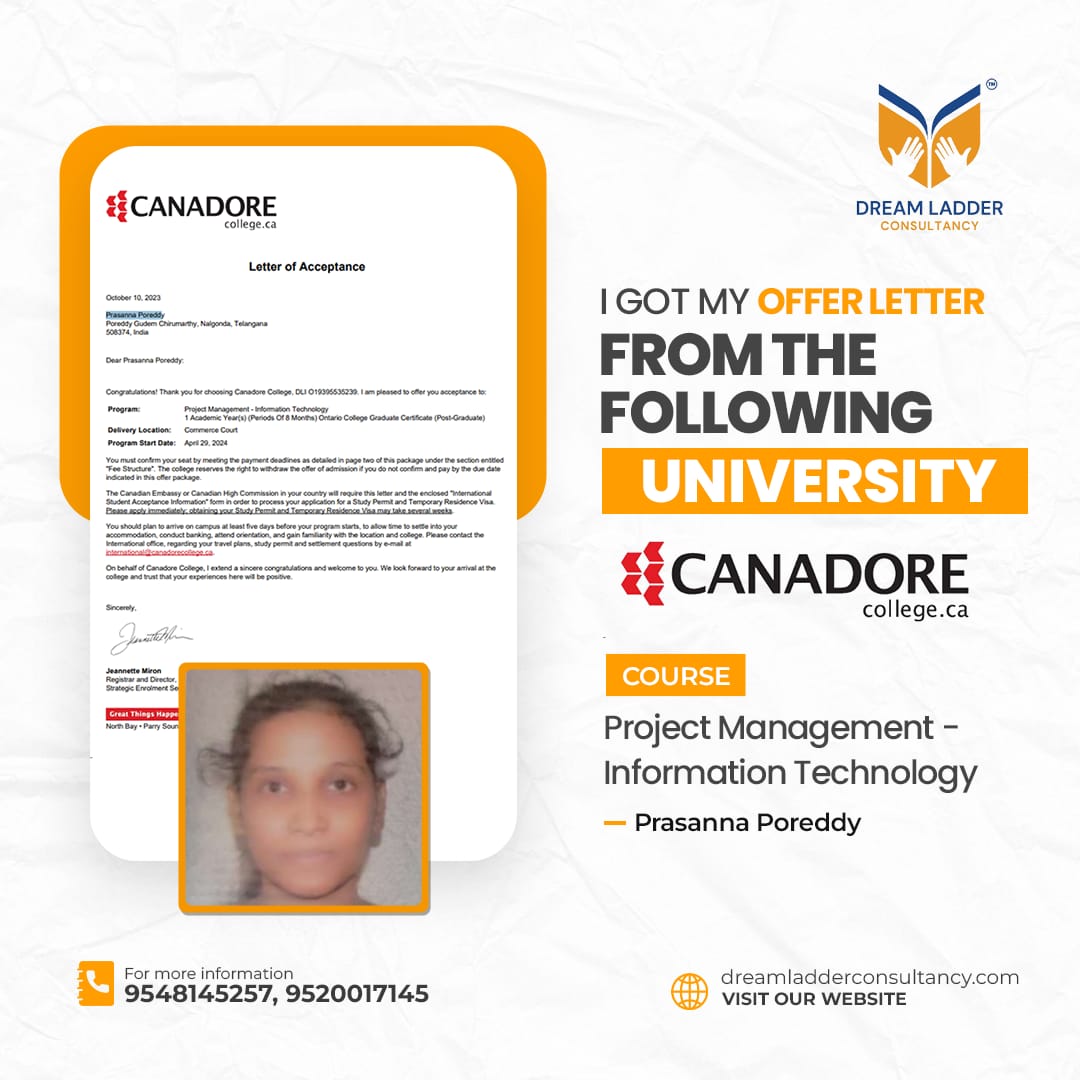
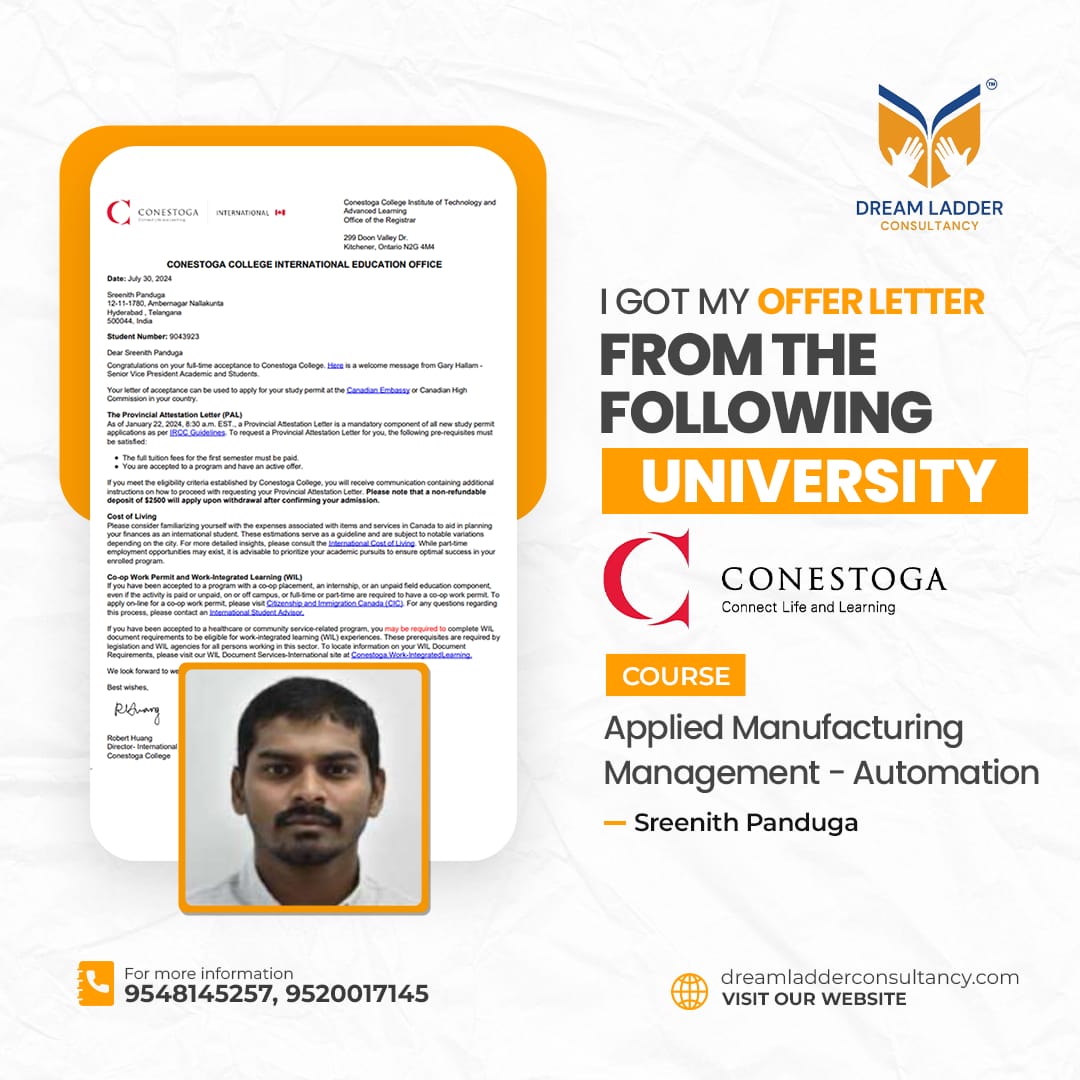
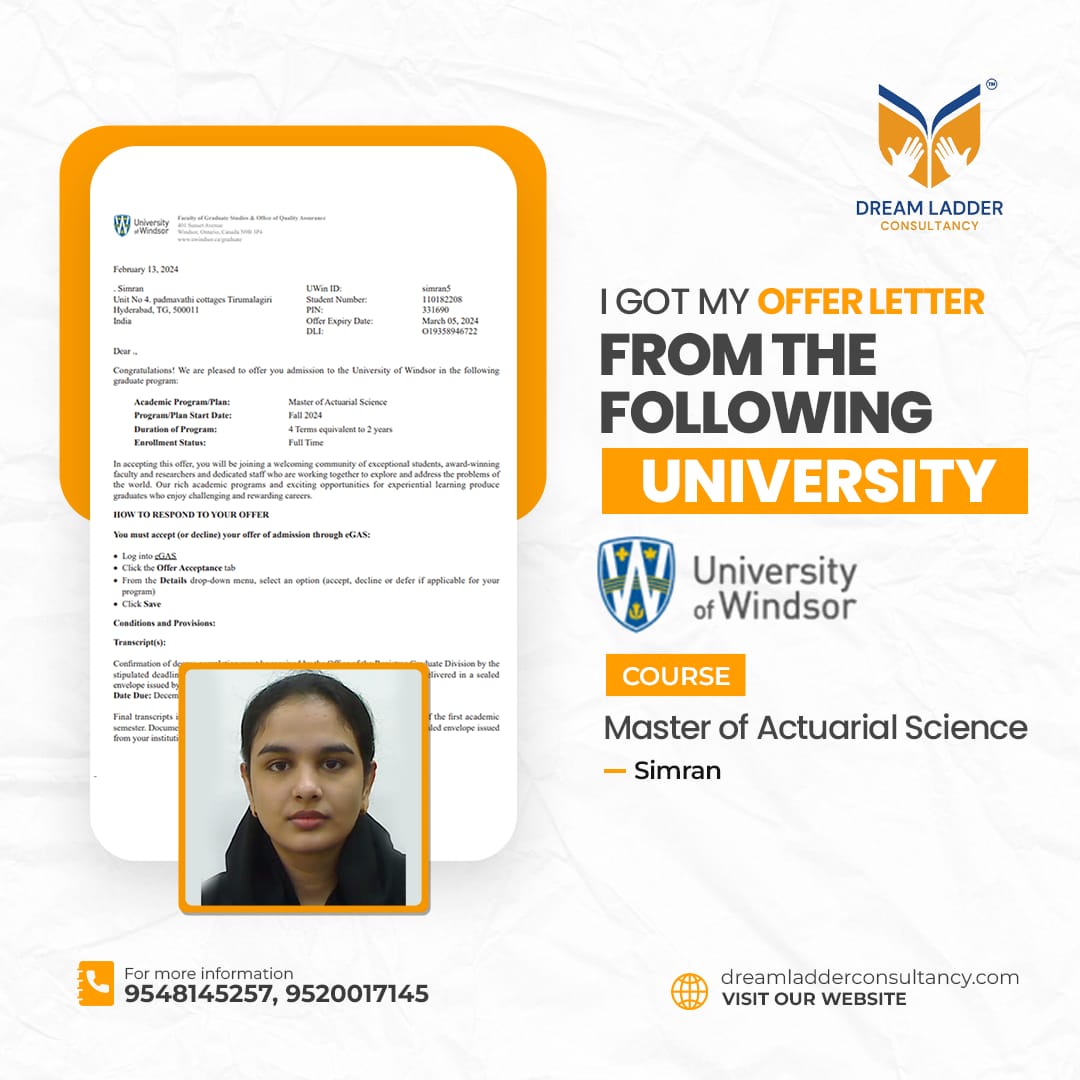
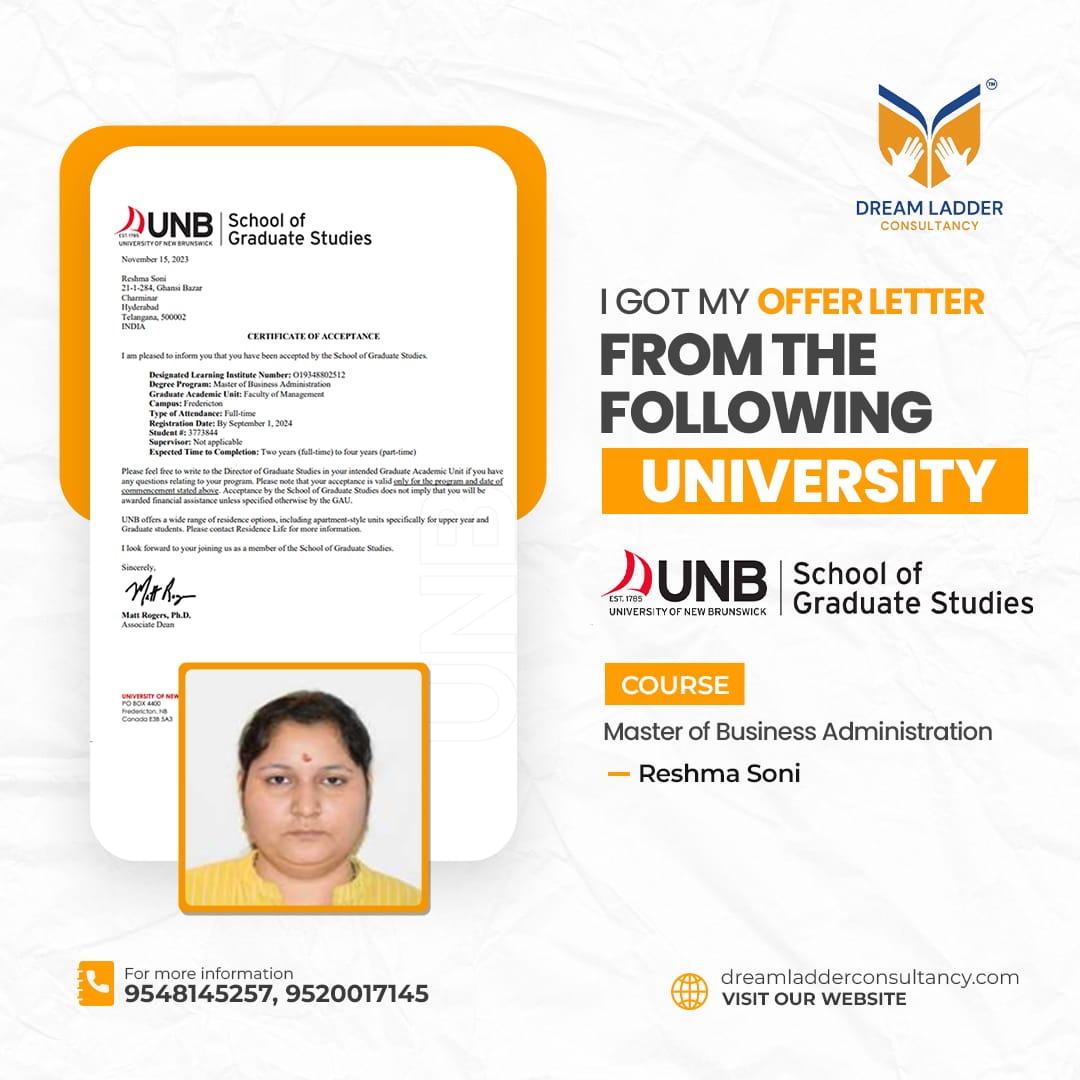
Voices of students who expanded their horizons and unlocked global opportunities with Dream Ladder’s mentorship.
Visa Guidance
"Flawless visa filing and documentation support. They made a stressful part of the process incredibly easy and error-free. My study visa was approved quickly!"
Student Success
"The Bear starts in Agra for student vigis and application. The stop is what welcoming and truly cares about student success highly recommended to aiming high."
Future Guidance
"Choosing them was the smartest move I made for my future the guidance on course selection and University application was flawless. thank you dream ladder"
Get answers to the most frequently asked questions about studying abroad
For US universities, the Common Application (Common App) is a convenient online portal that allows students to apply to more than 900 colleges and universities across the US.
English proficiency exams like IELTS, TOEFL, or Duolingo scores, and some of them also demand or recommend SAT or ACT scores, but lots of them are now optional.
The F-1 visa, also known as the US student visa, is required for those who wish to study full-time at a US-accredited university and allows them to live in the country and work for a limited period of time under specific rules.
The Form I-20 is issued by the university after admission and outlines the student's enrollment and funding details. It's a must-have document for settling the SEVIS fee and applying for the F-1 visa.
Yes, international students on an F-1 visa can work up to 20 hours per week on campus during the semester and full-time during holidays.
Curricular Practical Training (CPT) is a feature that enables students to participate in internships as part of their degree, while Optional Practical Training (OPT) is a 12-month (18 months in the case of STEM fields) post-graduation opportunity to work in the USA.
US universities frequently offer undergraduate scholarships to international students, many of which are merit- or need-based. Examples of scholarships include Presidential Scholarships, Trustee Scholarships, Dean's Scholarships, and need-based financial aid at a select group of private schools.
Join thousands of successful students who achieved their study abroad dreams with Dream Ladder. Your journey to international education excellence starts here.